Topic for October: Hosts – what are they, what do they do, how to act as a great host for your Village-In-The-City

Active and inclusive communities need active and inclusive people to help them work, bring people together, organise events, connect with newcomers and be there from time to time just to help pull it all together. These people are ‘hosts’.

In the dictionary, a host is defined as ‘someone who receives or entertains guests’. This translates into acting to bring people together, usually for some kind of purpose. In the olden days this fell (in a British context anyway) to the village priest and the pub landlord between them. Both had a position which brought them into contact with many others in the community and between them they had contact with most people. These days, both of these positions are not so influential (though they can still be important) – church attendance is dropping, while the pub is often more like a restaurant than a community gathering place.

The growth of villages in the city will depend on people stepping forward to connect people, invite them to events and gatherings, create spaces for those gatherings, and introduce people to each other. This may look more like Facebook-group Admin than Reverend Father (though any good clergyman will tell you that organising is a good part of their roles too!). In the Village In The City movement we call these hosts Village-Builders.

We all, at some unconscious level, know what good hosting looks like; after all, we have all been to parties, invited people to our houses and taken part in events and celebrations. However, it is quite hard to find good information about what exactly good hosts actually do. Village In The City founder Mark McKergow is an international expert in this field. His book Host is a rich exploration of the history and practice of hospitality in the context of community and organisational leadership. Hosts have an unusual position – they are both responsible for their guests (the ‘others’) and also serve them, help provide what’s needed and ensure that everyone is comfortable and engaged.

Mark identifies six key roles of a host (summarised briefly here):

Initiator

This is about looking around, seeing what needs to be done next, and then setting things in motion. What needs to be created?  What needs to be enhanced?  What (perhaps) needs to be superseded?  Who else is interested?  How to get things off the ground?  Host leaders step forward and make the first move.

Inviter

Reach out with an extended hand of welcome and engagement. Village Builders rarely have a lot of authority, it’s about working with influence and soft power. Getting others involved is best done in a way which invites – rather than insists – that they join us in working on some project, purpose or endeavour.

Space Creator

The role of host involves creating a suitable space – physical and interactional/psychological – for events to emerge and unfold. This can be physical space, and also psychological space – how does it feel to be involved?  Creating supportive and suitable spaces, whether for big events or small meetings, is a key part of the hosting role.

Gatekeeper

A Village Builder  knows the importance (and the creative possibilities) of defining boundaries. Having some key rules about how people work together at the outset can make dealing with the inevitable ups and downs much easier. Setting expectations and norms for ‘how we do things’ is crucial, particularly in the early stages of building your village. It’s easier to start on the right foot than have to change later on.  

Connector

Village Builders build connections between people, link people and ideas AND know when to leave them to get on with it. If we’ve initiated something, invited people and created a space, we clearly want to create something that it wouldn’t happen without people getting together. As connectors, we understand that, having brought people together, at some point we need to get out of the way, let the magic work and allow possibilities to emerge. Not every connection will bear fruit, but that’s no reason not to keep making them.

Co-participator

Co-participators initiate, provide AND join in along with everyone else. It is no surprise; for example, when we are invited for dinner, we expect the host to not only serve us with food, but eat the same food with us. Not only that; hosting etiquette the world over demands that the host serve their guests first. A good Village Builder will be there at events and meetings, not only to show a lead but also to enjoy participating. (And if participating isn’t enjoyable, then it’s time to do something about it!)

Sharing the Village Building

It’s a very good idea to gather a (small) team in the first instance to share the work off Village Building. More heads tend to provide more ideas and a wider perspective. It’s very good to have people to share ideas and discuss difficulties. I would suggest making this relatively informal at the outset, invite people to be involved, and welcome others who show an interest. Do not rush to formalise things – that may come later. The first thing is to get things moving in some of the directions proposed on this site.

This is an extract from our free Village Builders Handbook – download it free here. 

NEW podcast: Social gathering model with Jason Sears, VillageCo (USA)

At Village In The City we’re interested in building micro-local communities. Jason Sears, founder of VillageCo, has a slightly different yet related goal – building ‘village-like’ communities in large cities in the USA and then helping them become more local. Jason is using an open-source ‘social gathering model’ to do this, working in Seattle Washington and Boise Idaho.

Jason talks to Mark about VillageCo, what they’re doing, how it’s working, this social gathering model and what Jason has learned so far. We touched on how Jason is using Open Space Technology as part of his gatherings, the Sunday Assembly ‘non-religious church’ and the importance of relationship building. Jason also offers his very top tip for local community builders around the world.

Hear the podcast here or subscribe wherever you get your podcasts (Apple, Google, Amazon etc).

https://shows.acast.com/village-in-the-city/episodes/jason-sears-and-villageco-building-village-like-communities-

The hazards of excluding communities from active health creation – and what to do about it

Ignoring the lens of community development in health Care is not only a missed opportunity; it brings hazards and long-run dangers too. 

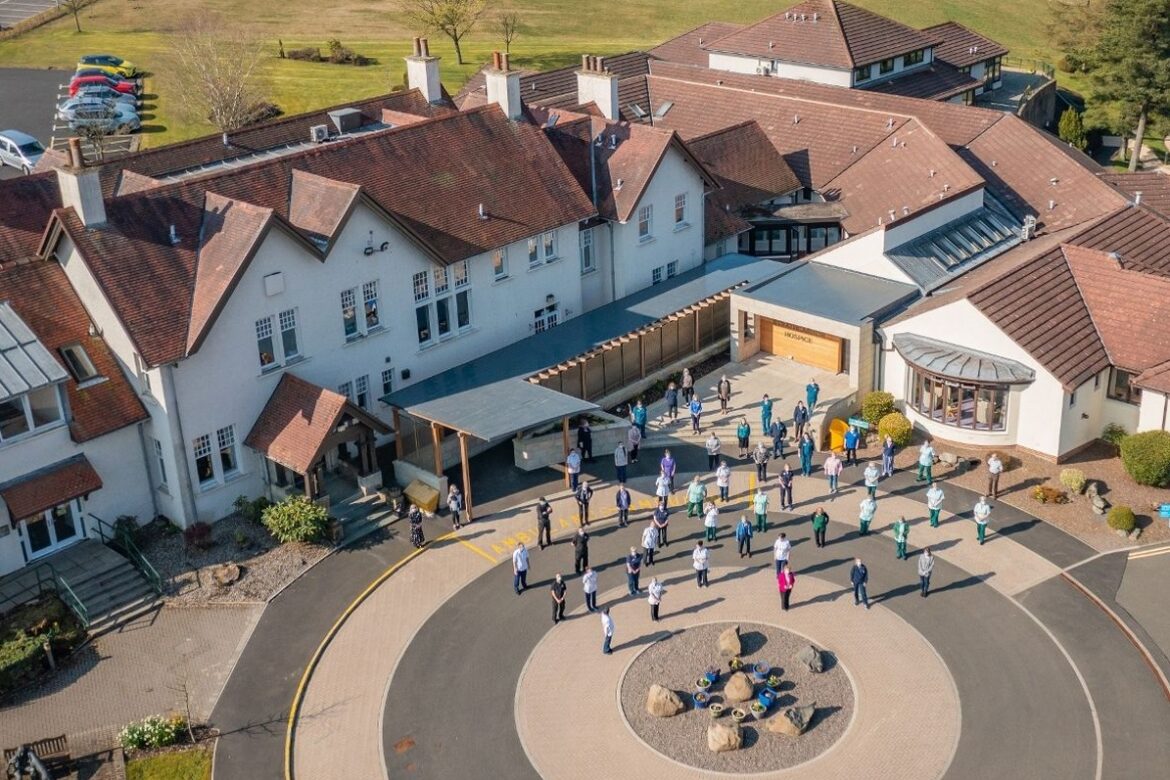
That’s the message of Cormac Russell’s recent paper Understanding ground-up community development from a practice perspective published in the open access journal Lifestyle Medicine.  The paper describes the change of focus of Strathcarron Hospice near Falkirk, Scotland from community engagement to community development.

This shift between 2018 and 2021 has resulted in a different kind of relationship between the hospice and the community – increasing community-first initiatives, people asking questions before they needed support, increasing community capacity to support neighbours, higher levels of trust, and more awareness of the dangers of professional over-reach. In seeking to help in disempowering ways, the hospice realised that they may be doing harm. In this post I will first summarise Cormac’s points, and then look at some of the ways forward (and pitfalls we might foresee).

In the article, Cormac Russell presents three lenses through which the relationship between communities and institutions can be viewed:

The Relief lens: the well-being of individuals is seen to be the result of services provided by professionals. ‘Clients’ of these professionals have needs that only the professionals can address – they are ‘needy’, not ‘needed’ as at least part of the solution. (Professionals do of course have a part to play, and may need to take a lead in crisis situations – but this is not a desirable place to be long-term.)

The Reform lens:  Usually layered over the relief lens, the reform lens stresses the need for systems and institutions to be reformed to help alleviate the needs of the community.  While this is a step forward, it is still an institution-focused view. Non-profit agencies may seek funding to achieve this – funds which then don’t go to the community. The reform lens can indeed bring improvement for citizens, but mediated through those who speak the language of government and prioritise professional interventions.

While these lenses are both necessary in some ways, they bring hazards. This is where Cormac Russell’s article is startlingly clear. He clearly and concisely lists these hazards in a way I haven’t seen before. They are (quoting from the paper):

  1. Individuals and groups are labelled and defined by their perceived weaknesses and conditions, not by their strengths and capacities.
  2. Most of the money intended for communities ultimately goes to those providing services to them.
  3. Active citizenship and grassroots activity retreat into the background, overshadowed by institutional largesse and overreach.
  4. Regular people and associations see themselves as inadequate and underqualified compared to professional helpers. Consequently, they become disabled.
  5. Residents accept that professionals and programmes imposed from the outside are their best hope for responding to end-of-life support needs.
  6. Individuals and communities are understood and come to see themselves as consumers, not producers. Thus, they outsource death, dying, and other health- and well-being-related issues to a licensed professional or institution.
  7. Institutional progressives will speak of prevention of illness while rarely talking about community health creation, because the latter relocates authority and resources towards community alternatives and away from traditional institutional interventions. (Russell, C., (2022), Lifestyle Medicine e269, https://onlinelibrary.wiley.com/doi/10.1002/lim2.69)

While Russell related these hazards to the activities of the hospice and end-of-life Care, they surely have a broader truth. Community health creation (and the creation of well-being, safety, longevity, child-raising, Care and much else) is kept out of the picture, not least by professionals who seem to value retaining their expertise, power and funding over supporting citizens and communities.

Cormac Russell then presents his third lens:

The Community lens:  The neighbourhood or community is the basic unit where health and other things are produced. Citizens “are recognised as having capacities to produce health, safety, and prosperity. This lens reveals neighbourhood associations as contexts in which to create and locate many sustainable supports, especially for those at the economic and social margins who are in need of Care and support” (Russell, 2022).

This is, of course, a paradigm shift in thinking about our society.

Cormac’s article continues with ways to set about building this new paradigm using Asset Based Community Development ideas. These are laudable and well worth exploring in terms of on-the-ground community building. One way to engage with these ideas is though Village In The City, which supports and encourages people to build micro-local communities in their own streets, blocks and neighbourhoods.

I’d like to set out here some of the ramifications of this paradigm shift to community-led work. If we are to make practical progress it will not (I think) be down to a lack of good ideas. Cormac Russell’s new book with John McKnight, The Connected Community, (published today) is a fine source of practice and wisdom. I think a bigger challenge will be practical stumbling blocks. As people start to encounter and engage with this new way of acting in community, it will feel a bit strange and there will be come unintended consequences.  Here are some ways we can help ourselves as this shift builds and develops:

  • Practical examples: The experience of Strathcarron Hospice is an excellent starting point. We will hope to hear more as they continue their journey. We will benefit greatly from more practical on-the-ground examples of communities coming to a point where they are taking a lead, setting goals, making plans and implementing them (with the help of, not in the teeth of, professionals).
  • Doing it in a community way: Cormac Russell talks about evolving a local Stewardship group, to act in deepening the connections within the local association of associations. It would very easy for such a group to slip into being (or appearing to be) an institution.  What forms of governance can support the combination of openness and responsibility that will come with financial, political and ethical considerations?
  • Value small steps: This transformation will not come as an immediately useable complete package. There will be small steps – a small project with the community driving here, a small bit of strings-free money there. It will be all to easy to dismiss these small steps as ‘not enough’, ‘a gesture’ or ‘sticking plaster’. We must take Care to present them as early signs, forerunners of a new way of living.
  • Prepare for local variety: There will be lots of ways to do this. Different places are bound to evolve different ways to achieve a residents-in-control level of participation. We must prepare to celebrate the differences rather than to seek to meld everything into a uniform approach. And yes, someone will complain about the ‘postcode lottery’ where people in one street have much more involvement than people in the next street. It’s part of the process, not a design flaw – cheer, support and use the difference as a driver for change, not something to moan about.
  • Engage the professionals: They are not, despite the impression I might have given above, the enemy. They will take time to adjust to a revised relationship too. Make it clear that partnership with the community will make their professional lives better, as well as their day-to-day experience of living as citizens. They will need to be valued even more by the community – but in a different way, as supporters and highly-skilled team members rather than authority figures to be obeyed at all times.
  • Treat slip-ups as valuable learning: There will be slip-ups and mishaps along this journey – times when things go wrong, slip through cracks, become left aside. There will be those who will shout that ‘this wouldn’t have happened if the professionals were still in charge’. Maybe not, but who would learn to walk or ride a bike if never given the opportunity?  This points again to working with the professionals as allies, not seeing them as the competition.

These five pointers will help to make the shift to community-led living a firmer and more sustainable reality.  The way ahead is hard enough without being prepared at some level for problems which will inevitably occur somewhere at some time (and probably in many places many times).

Mark McKergow, Village In The City

Running a neighbourhood Facebook group (or similar)

One key thing is that connection has to be, in some ways anyhow, two-way. It’s no longer enough to have one person in charge of sending out ‘communication’ to everyone else. We need ways in which citizens can connect with each other directly. Fortunately the tech revolution has made this much easier (in some ways). Facebook groups, Whatsapp groups, online forums, social media all have a part to play.

We suggest starting with a Facebook group or similar. Although not everyone is on Facebook and some have principled objections to it, the simple fact is that a Facebook group provides great functionality, free, with moderation features to ensure the discussion stays constructive and inclusive. Many people use the platform as part of their daily routine which means they see updates without having to go look for them (a factor which makes online forums less attractive, they require a special look to see what’s going on). Our Edinburgh West End group has grown from 20 to 2200 members over the past two years.

You can also limit participation to those who really do live (and perhaps work) locally. It’s a boon of the internet that people can in principle join from anywhere in the world, but for this type of micro-local group it pays to limit it to those who are on the spot. (This is an example of ‘gatekeeping’, a key activity for village builders, which we will discuss later when we come to Hosts.)

We have also found the value in having a behind the scenes organisers group for quick discussions about the suitability of posts etc – we use a Facebook Messenger group, Whatsapp groups are a good alternative. It’s important for the organisers/admins to be able to quickly sort out any problems and be able to support each other.

Another way to keep things useful and relevant in your online community is to have open rules of participation. We ask all members to sign up to these when they join. Our latest rules in the Edinburgh West End group are:

Membership 

Membership is conditional on answering all membership questions when applying. Failure to answer all questions will result in your application being declined. Membership is open to anyone/business who lives or works in the West End council ward area (Water of Leith to Morrison St, Magdala Crescent to Queensferry St) and nearby streets. Visiting tradesmen are not eligible.

No unauthorised promotions or spam 

Give more to this group than you take. Self-promotion, spam or irrelevant links aren’t allowed unless with prior Admin approval. When promoting a business include at the very top **Business Post**

Be kind and courteous 

We’re all in this together to create a welcoming environment. Let’s treat everyone with respect. Healthy debates are natural, but kindness is required. Post positive recommendations avoid the negative

Respect everyone’s privacy 

Being part of this group requires mutual trust. Authentic, expressive discussions make groups great, but may also be sensitive and private. What’s shared in the group should stay in the group.

No hate speech or bullying 

Make sure that everyone feels safe. Bullying of any kind isn’t allowed, and degrading comments about things such as race, religion, culture, sexual orientation, gender or identity will not be tolerated.

Consult group admins before creating Events in the group 

As the group stands, any member can create an Event.  In order to ensure that any Events are relevant and suitable, please consult with the group administrators and moderators before creating an event.

Political comments 

Posts or comments of a political nature, political views, party affiliations and political promotion are prohibited. Elected representatives and organisations are welcome to be members.

Press and media 

Members/Groups who have an association (directly or indirectly) with media or press outlets must not use any content (images or text) within the Group without the permission of the member concerned.

Transparency 

The group, all posts & comments made by members are public. The admins moderate conversations and any which violate rules may be removed. Repeated violations will lead to the member being removed.

Complaints and concerns

Members who have any complaints or concerns regarding group content should message a member of the Admin team to raise their concerns.

These rules have developed and evolved over time. Some of the appeared in response to specific circumstances (for example, a local paper picked up on a post without asking the poster). Others are quite general. Evolve your rules over time! Facebook only allows 10 rules so you may have to be careful how you word it all.

These rules are very valuable, particularly in difficult situations where you can point to them before (or alongside) taking action. I tend to have a slightly generous ‘give them another chance’ stance. I have learned, however, from a fellow admin in our group who has the firmer position (in a Scots accent) “When in doot, boot them oot!”.


NEW podcast – Last Aid: supporting the dying in your local community with Susan Speke and Siobhan Neylon

Listen and download at https://shows.acast.com/village-in-the-city/episodes/last-aid-supporting-the-dying-in-your-local-communit. Or better still use your device to search podcasts for Village In The City and subscribe. It’s free, you can hear all our podcasts to date and you’ll be notified when a new one comes out. 

How can we act in a human way in that most difficult situation – when someone in our community is dying? The Last Aid project and course can help you. Mark talks to Susan Speke and Siobhan Neylon from Highland Hospice in Inverness who offer Last Aid training and support in the UK (https://highlandhospice.org/what-we-do/education-learning-development/last-aid). We discuss how dealing with death can and should be part of a community’s response, why this is seen as such a difficult topic and how Last Aid’s ideas and resources can help anyone become better and more comfortable about working with both the dying and those around them.

Many people want to die at home, yet in western countries most die in institutions like hospitals and nursing homes. The Last Aid project helps to educate the community about the basics of palliative Care and Care for dying people. These courses are delivered using materials developed by Last Aid International.

More than 10,000 people have already participated in Last Aid courses and more than 1,500 trainers have been trained across many European countries including Denmark, Switzerland, France, Germany, Slovenia, Lithuania, Ireland, Austria and Scotland, and around the world including Australia and Canada.

Links: Highland Hospice Last Aid courses online and IRL: https://highlandhospice.org/what-we-do/education-learning-development/last-aid

Last Aid project website information (in English and German): https://www.letztehilfe.info/project/

#CommunityDevelopment #AssetBasedCommunityDevelopment #ABCD #VillageInTheCity

That link to the podcast about Last Aid.


Connection – our topic for September

We’ll be looking at one of the six key elements of a Village In The City each month. This first month, the topic is Connection within the village.

This is a vital starting point in building your Village In The City. How do people connect and communicate with each other? Back in the mists of time this was a combination of folk meeting in the street/market place/tavern/ church and some kind of ‘official’ news via the town crier, parish magazine, community noticeboard or whatever. These days, of course, the channels available to us are many and varied. Noticeboards can still be useful!

So let’s start by looking briefly at some good possibilities for building connection within your Village In The City.

One-way and two-way connection

Some of the older methods of communication are one-way. A paper newsletter connects the editor to the readers – but not really the other way around (unless there are letters etc – but that takes a long time). A noticeboard is a very useful thing, but who decides what is displayed? These connection methods give a lot of power to the ‘guardians’ of these outlets. Of course, those people may well have the best interests of the community at heart – but these channels don’t of themselves get people talking to each other.

One key thing is that this connection has to be, in some ways anyhow, two-way. It’s no longer enough to have one person in charge of sending out ‘communication’ to everyone else. We need ways in which citizens can connect with each other directly. Fortunately the tech revolution has made this much easier (in some ways). Facebook groups, Whatsapp groups, online forums, social media all have a part to play.

So let’s start the conversation here.

  • What connection methods do you use in your community?
  • How well do they work? What are the strengths and weaknesses?

Do please join in. The discussion is happening in our online community site powered by Mighty Networks. Do join if you haven’t already – it’s free and you also get updates and easy access to our events.

(Lots more about how to build Connection in the latest Village Builder Handbook – free download here.)

Join our podcast recording on Last Aid – Thursday 1 September 2022

Join our podcast recording on Last Aid – Thursday 1 September 2022, 11.30am UK time. Register free here to obtain the call link. 

Many people want to die at home, yet in western countries most die in institutions like hospitals and nursing homes. The Last Aid project helps to educate the community about the basics of palliative Care and Care for dying people. These courses are delivered using materials developed by Last Aid International.

More than 10,000 people have already participated in Last Aid courses and more than 1,500 trainers have been trained across many European countries including Denmark, Switzerland, France, Germany, Slovenia, Lithuania, Ireland, Austria and Scotland, and around the world including Australia and Canada.

Village In The City founder Mark McKergow will be talking to Susan Speke and Siobhan Neylon from Highland Hospice in Inverness who offer Last Aid training and support in the UK (https://highlandhospice.org/what-we-do/education-learning-development/last-aid). We will be discussing how dealing with death can and should be part of a community’s response, why this is seen as such a difficult topic and how Last Aid’s ideas and resources can help anyone become better and more comfortable about working with both the dying and those around them.

You are invited to join the live podcast recording to join in the conversation, ask questions and share your own experiences and responses to the topic. The resulting audio will be released on our podcast platform (https://shows.acast.com/village-in-the-city) for international listening and sharing. You can subscribe to the podcast wherever you normally get your podcasts (Apple, Google, Amazon etc).

Reserve your place on this call at https://www.eventbrite.co.uk/e/village-in-the-city-podcast-recording-last-aid-tickets-407464315737

Exciting news about the Autumn 2022 Village In The City programme

I hope you’re all enjoying your summers. I’ve been thinking about how to continue the development of Village In The City. Here is what’s in the pipeline for this Autumn and the next few months.

New podcast recordings

We’ve been building up a podcast collection from past call recordings (available wherever you get your podcasts, Apple, Google, Amazon etc, or just click here to listen and subscribe). I will be recording some new podcasts with new guests who have something interesting to say about creating, sustaining and empowering micro-local communities. The recordings will be open to members to join us live, ask questions and get involved. Look out for news in the events section!

Topic of the month

As you may remember, our Manifesto outlines six key elements for a successful and thriving neighbourhood community:

  • Connection
  • Hosts
  • Meeting places
  • Inclusivity
  • Inclusive events
  • Identity

We will be focusing on one of these elements every month. The first will be in September 2022, when there will be a focus on Connection. Look out for blogs, polls, discussions, calls and resources during that month!

Continuing learning and sharing calls

Our monthly calls will continue in a similar way, where any member can bring along news, successes, questions, challenges, problems or anything else about your micro-local community and we can all work on it together.  A new feature will be some space for the ‘topic of the month’ as well as general discussion and issues.  Dates for these calls are:

  • Wednesday 17 August 2022
  • Tuesday 13 September 2022
  • Wednesday 19 October 2022
  • Tuesday 22 November 2022
  • Wednesday 14 December 2022

These one hour Zoom calls are always at 7pm UK time. That normally translates as 8pm CET, 2pm EST, 11am Pacific.  These calls will appear in the Events section of our community website and are free to join. You’ll get a warm welcome, the chance to meet other neighbourhood community builders from around the world and you’ll share and learn with us all.

Use the site!

Our Mighty Networks community website offers you the chance for you to post news of your community, share updates, ask for ideas and support and share new ideas and resources from the international world of Asset Based Community Development.  Please use it, and respond positively to those who do. Join us free at https://members.villageinthecity.net.

I’m always very open to suggestions and ideas about other things we can do together and can offer to members and community builders around the world. Please let us know your ideas, hopes and preferences in the comments below.

Hope to see you soon at one of our upcoming events.

Cheers, Mark

New podcast: Building safe, strong and inclusive communities with Dilia Swart, Protection Approaches

Our ninth podcast is out today! Dilia Swart and her colleagues from London-based charity Protection Approaches talk about  their experiences of inclusive community building as a way of fighting identity-based violence. (And even if that isn’t an issue for you specifically, they have a lot to say about how to build safe, strong, inclusive communities).  You can subscribe to our podcasts wherever you usually get yours (Apple, Google etc) or just listen here. https://shows.acast.com/village-in-the-city/episodes/episode-9-safe-strong-cohesive-communities-with-dilia-swart

Dilia Swart talks about her work in building strong safe communities to protect people from identity-based violence in London and elsewhere.

The latest Village In The City podcast welcomes Dilia Swart of Protection Approaches to talk about their work in building communities as a means of working to prevent identity-based violence. Protection Approaches was established as a UK charity in 2014 working to end all forms of identity-based violence motivated by the perpetrator’s conceptualisation of their victim’s identity, for example their race, gender, sexuality, religion or political affiliation. It encompasses hate crime, violent extremism, and genocide and affects individuals as well as entire groups or communities all around the world.

A key part of this work is helping to build active, safe and strong communities where marginalised communities and voices are included. They work to broker new and sustainable community relationships that will facilitate community-led change in some of London’s most disadvantaged boroughs, and also run (very good) community development programmes supported by the Mayor of London and the Home Office. These programme aim to encouraging community-led responses to hate crime and the prejudice and marginalisation that can lead to such crimes.

Dilia Swart is Senior Education Officer at Protection Approaches, and leads the delivery of their education programme working with schools to promote positive school cultures that foster tolerance and build resilience to divisive narratives. She was the co-founder of the Mostar Summer Youth Programme, an educational project in Bosnia-Herzegovina, and has degrees from Harvard and SOAS. Dilia and her colleagues share how the particularly tough issues of identity based violence can be tackled from a community perspective and share her experiences of working in London and elsewhere.

Listen at https://shows.acast.com/village-in-the-city/episodes/episode-9-safe-strong-cohesive-communities-with-dilia-swart or subscribe to the Village In The City podcast wherever your normally gets yours from (Apple, Google etc).

How to find low cost/free, high quality venues for community events

How to find low cost/free, high quality venues for community events

Guest blog by Richard Lucas

At a recent Village in the City monthly meeting we discussed how to find venues. I have a lot of experience and I offered to put together a guide for our webpage and my blog. This is it.

The good news is that for non-profits it is possible to get good venues either free or very inexpensively.  I’ve done events in the Brighton, Calgary, Cambridge, Cape Town, Edinburgh, Kraków, Lisbon, London, Lviv, New York, Oxford, Rome, Spokane, Taipei, Vancouver and Warsaw, for as many as a thousand people to as few as five, and in the vast majority of cases I didn’t pay anything.  The venues have been Accelerators, apartments, Bars, Cafes, Churches, Clubs, Companies, Conference Centres,  Co-working spaces, Houses, a Jewish Community Centre, Libraries, Offices, Museums,  Restaurants, Schools, Technology Parks, Theatres, Think Tanks, Town Halls, and Universities.  

Not all venues are equal, and some places that “look great” are anything but, so…..

What makes a good venue?

Friendly management and staff 

(And not just the owner/boss). A venue is not just bricks and mortar, space and stage – it is also the people who work there.

Just as someone very good looking can have their personality spoiled by their physical appeal and become smug and superior, so the staff at a lovely venue may become entitled and arrogant, knowing that people will be lining up to get that function room with (for example) a view of the Eiffel Tower, no matter how snooty they are.  Try to get a feel for whether the people who work at the venue are going to be helpful, and make sure you know who will be on duty/in charge in the hours running up to your event.  This is a two way street – be friendly to the staff who work there, from the cloak room, security and bar staff, asking their names, explaining what the event is about, treating them as people, not “service providers”. 

Dedicated space

Is there a side/function room that you can have exclusive use of? It is problematic to have mixed use of space, with other things going on in “your” event space at the same time. For example if there is a group eating at a table, while you are trying to present something, you will both disturb each other. If they are paying, it is hard for you or the staff to ask the paying guests to be quiet.  If there is a DJ who was expecting to be in the limelight, he/she may put on music,  making it hard to talk. An open plan coworking space may have people who have paid to be there who expect quiet.

Dedicated space is usually best, sometimes hybrid works well so you have some space to yourself from 18-20:00 and from then it is open to everyone so the place gets lively as you finish and your group can, but don’t have to, stay on to socialise.

Technical set up 

Depending on the size of the gathering you may well want a microphone, projector and internet access.  Make sure to test everything beforehand. Missing cables, not knowing where the power is and so on can be fixed ahead of time, not on the day. Assuming that “the venue” knows how to set things up is risky. The person who knows may not be there.  Find out who the technical point of contact will be on the day,  

Timing, chairs, tables, signage

Will they give you access before and and permission to move chairs & tables around, put up welcome posters, make a registration desk?  Once people start arriving it’s too late. You and your volunteers need to get this done, before the first guest arrives.

Special deals and promotions

Sometimes in commercial venues where the venue are hoping to sell extra drinks, they will offer some kind of drinks promotion. If they do, and it is the type of event where people do not always show up punctually then make it time or numbers limited.
First 25 guests get a drink for “X”, where “X” is a bargain price, or
“Happy Hour” until 1930”
which encourages guest to be early/come on time. 

(Don’t overdo it, it is not a good sign if too much has to be given away in order to get people to come).

Look, feel and location

It’s good to be somewhere easy to find and get to by public transport, that matches the kind of event you want to have. An upmarket hotel (even if free), may not be the right place for a low budget NGO,  and will be expensive if people want to stay on after your meeting to socialise. If it is a room on a School or University campus, make sure there is crystal clear information about how to find the room for people who do not know their way around. 

What happens afterwards

When your event ends, it is very nice to be able to say: “The event is over but you are welcome to stay”.  This works well in a commercial venue like a cafe or pub because the business gets extra revenue and will close up whenever they normally do. A meeting room in a library will need to be tidied up and cleaned, creating a danger of you the host being left behind while others troop off to relax. It is a good idea to get everyone who attended involved in the “tidy up”.  

Summary 

It is important to be pragmatic and flexible. Beggars can’t be choosers. There will always be something to compromise about for any venue, and if you find a good venue, do not take it for granted, make sure you keep excellent relations with the staff, and thank them publicly at your event, and send ‘thank yous” afterwards. 

How to find venues

The best way to find venues is to research where other events happen. Every community has spaces in which people hold gatherings.  There will be “what’s on” listings in local newspapers, notices on notice boards, events on social media like Facebook and dedicated event listing platforms like Meetup and Eventbrite. Unless the event is online, there will always be a venue.   If you are hunting for a venue, copy paste the name and addresses into a spreadsheet, and google them, to find the opening hours, contact details, and who is in charge.  Make a note of the types of event that are being held with a link, to get a sense of the capacity. You may find details of the spaces available at an address and a price list, together with information about any discounts for community events. 

If the organisation and person organising the event seem to be suitable, note their details too. The organisation hosting the event may be quite separate from the team who manage the building.    You may want to ask the event organiser for advice about why they chose that venue. 

If a venue looks promising and you have the time, go to an event there to see what it is like and make notes about how things work there, (and maybe take photos). 

Think about the business model and interests of the venue owners.

A cafe, bar, or restaurant may well be interested in having events on non-busy nights of the week,  where bringing people into the venue means extra revenue.  Usually that means Sunday to Wednesday.  Thursday to Saturday are not just typically busy nights, but also when people and companies make bookings for parties which are a major revenue source. Unless you can give a revenue guarantee, it’s hard to make exclusive bookings for busy nights.   

Co-working spaces often promote themselves as having a community function. Provided the event you are organising may be of interest to their members, and fits their goals, they can be very open to something interesting that they don’t have to organise, even better if they believe the event can build awareness of their existence. It may often be the case that the event should be booked by someone who is a member of that co-working space. The same will often be true of schools and universities. They almost always will have space available free or very cheap for School and University societies.  

Community centres, church halls, think tanks, and foundations have quite a lot of discretion over the rates they charge. If your event appeals to their raison d’être and the people in charge, they may be very willing to help, and even if they do not exist to make money, they will almost always welcome praise and publicity.  

Once you have identified suitable spaces, figure out who is in charge, who the right person to talk to is, and how to approach them. You need to be ready to explain who you are, what track record you have and what your organisation stands for and does. If you are at a venue which seems suitable, simply asking the staff who the right person to speak to about events is a great way to start. A face to face exchange of information makes a far better impression than an email, and the person you speak to will be able to pass on their impressions of you to the decision maker.  If they ask you to “send us an email” ask for the names of both the person you have spoken to and other people who are deciding. so that you can add that information in the message you send.  

Remember the adage “you never get a second chance to make a first impression”. The decision maker will ask you to send them some details of your organisation and event. Have that pre-prepared so you can send a personalised email within minutes of your conversation, showing you are well organised and a good communicator. 

In conclusion, this approach has worked for me, in countries all over the world. It’s not guaranteed, of course, and you need to realise you are not entitled to free space. You must make the case, and be persuasive, but if you follow the steps I suggest above, I believe you will find somewhere. 

Richard Lucas. June 2022

What to do about “hard-to-reach” groups

Village In The City was set up to help community members connect and build their own micro-local communities.  We also attract interest from people who are involved professionally in community development and engagement, which is great – the more heads and experience around the table, the better!

When asked about their hopes for joining Village In The City, one such new member from the UK said:

“I hope to get advice about how to reach different and hard-to-reach demographics to inform them about consultations and engagement events at the council which may impact them, and give them a chance to have their say.”

This is a great question! We talked about it at our May 2022 Village Builders call. These monthly calls are open to all members of our free online community (http://members.villageinthecity.net), and offer a place to share questions and challenges which we then work on together, live on the call. And here’s what we discussed:

Would they say they are “hard to reach”?

There seems to be something a little one-sided in referring to groups or demographics as ‘hard to reach’.  It can even sound as if the so-called hard-to-reach people are in some way to blame.  We talked about turning the situation around in our minds – what makes our project/event/service hard to engage with? How do we change the impression we give? How do we make ourselves relevant and useful to everyone, including these demographics? This can include the name as well as how it looks, where it crops up and what it offers. And some people get put off by the place/space to which they are being invited (perhaps it’s associated with unfortunate past incidents or crime?), or even being for people ‘not like me’.  Being seen as telling people off for not using your service isn’t a good look, we think.

Service user or participant?

In some ways, the ‘service user’ tag/mindset is useful – seeing those involved as clients or even customers can be a helpful reminder to engage with the people and their needs and hopes, rather than simply dishing out whatever resource is on offer.  On other ways, though, it can get in the way.

Are we inviting people to simply take (or leave) what’s available, or are we offering them the chance to participate, to shape what is happening, to have their views heard and (visibly) utilised, to be part of developing the future? It may be that these ‘hard to reach’ people are simply not convinced that there is value for them in engaging. They may have engaged before and found it unhelpful or worse. They may be not be convinced that they are really being asked to contribute. They may have offered to participate before, only to find the offer hollow and unsatisfactory. Once bitten, twice shy (and thrice telling others to steer clear).

How to join in and what to expect?

Another thing that can interfere with people engaging with projects (and therefore becoming ‘hard-to-reach’ is lack of clarity of how to engage. Sometimes projects can be over-rigid in how they require people to knock on their doors.  Not everyone has internet access for booking, or getting information. Some may be on very limited data packages and unable or unwilling to do long Zoom calls. Some can’t make the day or time for all sorts of good reasons.

And the other possibility is also true. In setting out to be flexible and accommodating, some projects can develop into a ‘tyranny of structurelessness’, where it all looks random and ad-hoc to outsiders (and maybe even to insiders).  It can be very daunting to enter a space where nobody seems to know what they are doing (which might be described by those closely involved as informal, spontaneous and open) but can actually lead to abuses of power as there are no checks and processes. The kind of people who get called ‘hard-to-reach’ may be exactly the people who are less confident, less eloquent and less accustomed to making themselves heard.

Hard-to-reach or easy-to-ignore?

One final thought.  Sometimes people who are described as ‘hard-to-reach’ can all too easily become ‘easy to ignore’. Maybe because they have unusual (by the local standards) needs, maybe they don’t speak the language very well, maybe they are seen as a nuisance, maybe they are seen as ‘on the other side’ in some way.

The What Works Scotland review of evidence on promoting equality in community engagement is a comprehensive, if rather academic, look at a wide range of issues in this regard. It’s available free at http://whatworksscotland.ac.uk/wp-content/uploads/2017/12/WWSHardToReachOrEasyToIgnoreEvidenceReview.pdf.

In conclusion

100 years ago, Dale Carnegie wrote in How To Win Friends And Influence People that if you want people to be interested in you, you have to get interested in them. This remains as true today as it ever was. Some short guidelines about engaging with hard-to-reach groups:

  • It’s up to us as professionals or community builders to get out to those people – we can’t (by definition) simply hope they will arrive one day.
  • Make our work and services attractive and relevant (and approachable)
  • If we are seeking participation, then make sure it really is participative, the results of people’s participation is visible (in particular to them) and they are acknowledged, thanked and kept involved
  • Be clear as to how to engage and join in. Ask people what would be useful. Experiment. And make sure people are welcomed immediately when they do arrive
  • If you are simply ticking a box, don’t bother. If you really want to engage with different groups, they will want to see action.

Thanks to those Village In The City members who joined in with this conversation (including Richard Lucas, Lynn Darke, Brian De Lord, Joan Robertson, Mark McKergow) on our May 2022 call. To join our community and participate in future calls, visit http://members.villageinthecity.net.


Host a Jane’s Walk – a simple, imaginative and encouraging way to connect with your micro-local community

Here at Village In The City we love things that are simple and effective. And we’ve just come across the international Jane’s Walk movement, which offers an excellent way to connect with your neighbours in an imaginative yet low-risk and creative way.

Jane’s Walk is a community-based approach to city building that uses volunteer-led walking tours to make space for people to connect around their neighbourhoods. It was founded in Toronto in 2006 in honour of community urban activist Jane Jacobs (1916-2006). Over the next decade, the movement saw rapid global uptake. In 2017, 1,700 Jane’s Walks took place in 225 cities around the world, spanning 37 countries and 6 continents. The movement continues to grow every year, with a focus on events around Jane Jacobs’ birthday in early May (this year 6-8 May 2022).

Jane’s Walks encourage people to share stories about their neighbourhoods, discover unseen aspects of their communities, and use walking as a way to connect with their neighbours. They are:

  • Free, volunteer-led, and open to everyone
  • Non-commercial and non-partisan
  • Seek to promote dialogue – they are not ‘walking lectures’.

Hosts do not need to be experts, professional tour guides or anything else. They should have a desire to connect with people in their neighbourhood, plan a route, welcome them on the day and share stories as they walk for an hour or so.

Village In The City founder Mark McKergow is bringing Jane’s Walk to Edinburgh, Scotland this year, and it’s exciting that this is the very first time it’s happened anywhere in Scotland! You can see more about the Edinburgh events on their website.

So, could you host a Jane’s Walk in your neighbourhood? It’s relatively easy to do, there is no commitment beyond doing it once, and it could lead to some interesting and useful connections as well as re-visioning aspects of your local landscape and community. Here’s what to do:

  1. Check if there is already a Jane’s Walk city host for your city – http://janeswalk.org/cities/. If there is, contact them.
  2. If there isn’t an existing host, you can apply to be one. http://janeswalk.org/add-a-city/
  3. And/or you can just declare that you’re doing a Jane’s Walk in your area and go ahead! https://janeswalk.org/get-involved/lead-a-walk/

It’s worth getting involved with your city host – they will have access to graphics and resource to help you.  With just a couple of weeks to go until Jane’s Walk Festival 2022, there is still time. Go for it! (And let us know here how you get on.)

Jane Jacobs


Village In The City is a post-COVID initiative to help you build micro-local communications and communities where YOU live.

Sign up

Our Contacts

20 Atholl Crescent, Edinburgh EH3 8HQ

+44 (0)7976 936086

mark@villageinthecity.net