
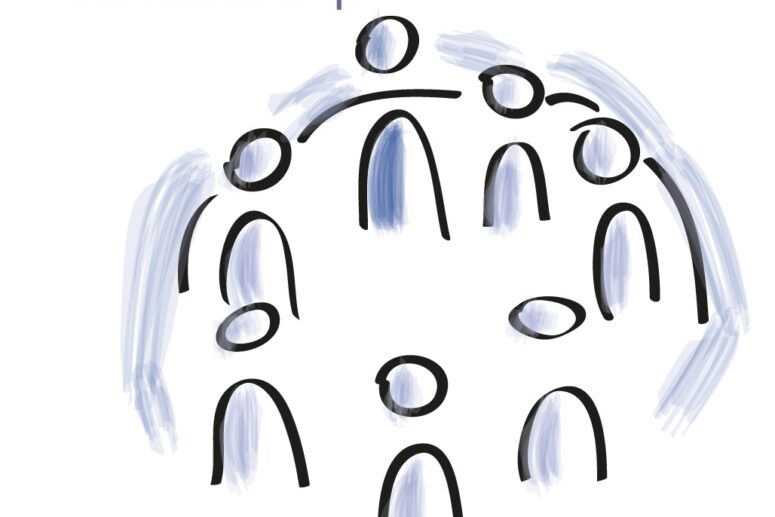
Active and inclusive communities need active and inclusive people to help them work, bring people together, organise events, connect with newcomers and be there from time to time just to help pull it all together. These people are ‘hosts’.
In the dictionary, a host is defined as ‘someone who receives or entertains guests’. This translates into acting to bring people together, usually for some kind of purpose. In the olden days this fell (in a British context anyway) to the village priest and the pub landlord between them. Both had a position which brought them into contact with many others in the community and between them they had contact with most people. These days, both of these positions are not so influential (though they can still be important) – church attendance is dropping, while the pub is often more like a restaurant than a community gathering place.
The growth of villages in the city will depend on people stepping forward to connect people, invite them to events and gatherings, create spaces for those gatherings, and introduce people to each other. This may look more like Facebook-group Admin than Reverend Father (though any good clergyman will tell you that organising is a good part of their roles too!). In the Village In The City movement we call these hosts Village-Builders.
We all, at some unconscious level, know what good hosting looks like; after all, we have all been to parties, invited people to our houses and taken part in events and celebrations. However, it is quite hard to find good information about what exactly good hosts actually do. Village In The City founder Mark McKergow is an international expert in this field. His book Host is a rich exploration of the history and practice of hospitality in the context of community and organisational leadership. Hosts have an unusual position – they are both responsible for their guests (the ‘others’) and also serve them, help provide what’s needed and ensure that everyone is comfortable and engaged.
Mark identifies six key roles of a host (summarised briefly here):
Initiator
This is about looking around, seeing what needs to be done next, and then setting things in motion. What needs to be created? What needs to be enhanced? What (perhaps) needs to be superseded? Who else is interested? How to get things off the ground? Host leaders step forward and make the first move.
Inviter
Reach out with an extended hand of welcome and engagement. Village Builders rarely have a lot of authority, it’s about working with influence and soft power. Getting others involved is best done in a way which invites – rather than insists – that they join us in working on some project, purpose or endeavour.
Space Creator
The role of host involves creating a suitable space – physical and interactional/psychological – for events to emerge and unfold. This can be physical space, and also psychological space – how does it feel to be involved? Creating supportive and suitable spaces, whether for big events or small meetings, is a key part of the hosting role.
Gatekeeper
A Village Builder knows the importance (and the creative possibilities) of defining boundaries. Having some key rules about how people work together at the outset can make dealing with the inevitable ups and downs much easier. Setting expectations and norms for ‘how we do things’ is crucial, particularly in the early stages of building your village. It’s easier to start on the right foot than have to change later on.
Connector
Village Builders build connections between people, link people and ideas AND know when to leave them to get on with it. If we’ve initiated something, invited people and created a space, we clearly want to create something that it wouldn’t happen without people getting together. As connectors, we understand that, having brought people together, at some point we need to get out of the way, let the magic work and allow possibilities to emerge. Not every connection will bear fruit, but that’s no reason not to keep making them.
Co-participator
Co-participators initiate, provide AND join in along with everyone else. It is no surprise; for example, when we are invited for dinner, we expect the host to not only serve us with food, but eat the same food with us. Not only that; hosting etiquette the world over demands that the host serve their guests first. A good Village Builder will be there at events and meetings, not only to show a lead but also to enjoy participating. (And if participating isn’t enjoyable, then it’s time to do something about it!)
Sharing the Village Building
It’s a very good idea to gather a (small) team in the first instance to share the work off Village Building. More heads tend to provide more ideas and a wider perspective. It’s very good to have people to share ideas and discuss difficulties. I would suggest making this relatively informal at the outset, invite people to be involved, and welcome others who show an interest. Do not rush to formalise things – that may come later. The first thing is to get things moving in some of the directions proposed on this site.
This is an extract from our free Village Builders Handbook – download it free here.

